We’ve all experienced that deeply frustrating moment at a doctor’s office where, after describing a devastating, sleep-depriving skin flare, we are met with a shrug and a generic piece of advice: “Well, eczema is heavily linked to stress. Try to relax.” When you are navigating the intense physical torment of chronic eczema or the raw, burning layers of Topical Steroid Withdrawal (TSW), being told to just relax feels like a slap in the face. It frames stress as a simple mood issue rather than a full-body physiological event.
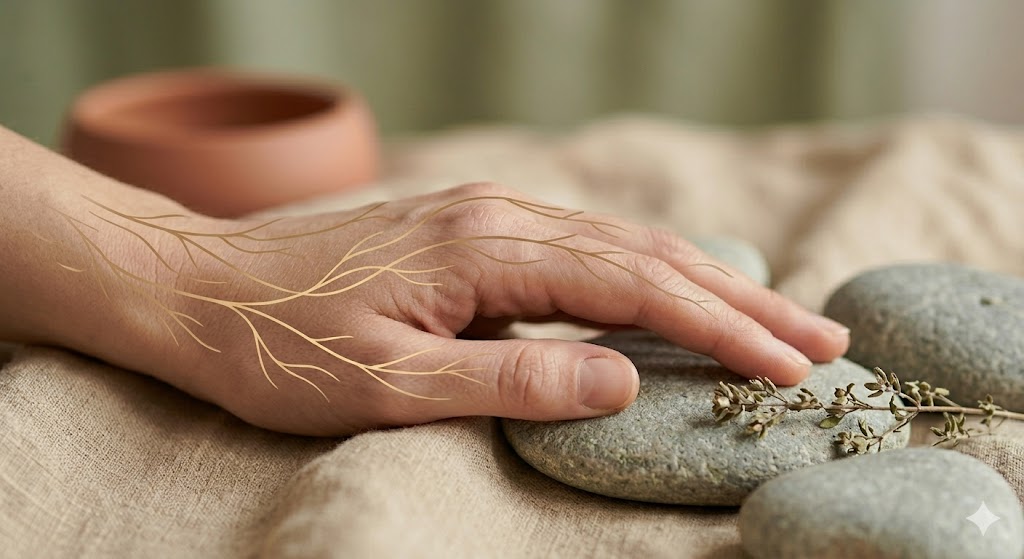
But your skin isn’t throwing a tantrum because you are mentally stressed; it is reacting to a massive, systemic neurological shift. Through the lenses of polyvagal theory and trauma-informed healing—pioneered by brilliant minds like Peter Levine and Gabor Maté—we come to understand that the skin and the nervous system are actually developed from the exact same cellular layer in the womb. They are biological siblings. When your mind perceives a threat, your nervous system doesn’t keep that information to itself. It immediately communicates that state of survival straight to your skin.
During the darkest periods of my own healing journey, a sudden emotional trigger, an argument, or an overwhelming week wouldn’t just leave me feeling anxious—it would physically manifest on my arms, neck, and face within hours. For a long time, I blamed my skin. I thought my barrier was inherently broken and failing me. It wasn’t until I stopped looking at my skin through the lens of dermatology and started looking at it through the lens of nervous system regulation that the pieces finally fell into place.
When you enter a state of chronic stress, your body slips into a prolonged fight-or-flight survival response. This shifts your internal resources away from “housekeeping” tasks like cellular repair and digestion, and funnels everything into immediate survival. Neurotransmitters and stress hormones cascade through your system, signaling your mast cells to instantly release a massive flood of histamines and pro-inflammatory chemicals called cytokines. This sudden chemical dump is what causes that immediate, hot, angry redness to bloom across your skin surface.
At the exact same time, this neurological panic state completely alters your skin’s physical structure. It actively halts the production of lipids and ceramides—the essential moisture-locking fats that keep your skin barrier intact. Without these protective oils, your skin rapidly loses hydration, becomes incredibly dry, and develops microscopic cracks. External irritants, dust, and bacteria can now easily slip past your frontline defenses, triggering a secondary wave of immune system panic and an intense, deep-seated “nerve itch” that feels impossible to soothe with standard topicals.
The trap most of us fall into during a stress-induced flare is trying to aggressive-scrub or drown our skin in heavy, water-based commercial lotions. Because a water-based cream requires chemical preservatives, stabilizers, and alcohol to keep it shelf-stable, applying it to a depleted, stressed barrier will cause an agonizing stinging sensation and trigger a massive rebound flare. To safely support your skin from the outside, you need to step away from complex chemical lotions and feed it pure, water-free plant balms or ointments that mimic your skin’s natural sebum, offering a gentle, breathable shield that calms the surface fire.
Protecting the physical surface with clean, water-free nourishment is half the battle, but permanent healing requires you to address the neurological engine driving the fire from within. Your skin will continue to flare as long as your body believes it is actively fighting for survival. If you want to dive deep into the biological connection between your skin barrier and your state of internal safety, check out our core blueprint guide: The Nervous System and Eczema: Why Your Skin Isn’t Just a Skin Problem.
What to read next in this cluster:
- Calendula cream for eczema does it work
- High cortisol and eczema flares
Disclaimer: I am a natural health blogger and advocate sharing my personal research and journey toward skin healing; I am not a medical professional. This content is for educational and informational purposes only and should not be taken as medical advice. Always consult with a qualified healthcare provider before changing your skincare routine or managing chronic skin conditions.
Leave a Reply