Author: admin

  • Why Does Eczema Get Worse When Stressed? (It’s Not Just In Your Head)

    Why Does Eczema Get Worse When Stressed? (It’s Not Just In Your Head)

      We’ve all experienced that deeply frustrating moment at a doctor’s office where, after describing a devastating, sleep-depriving skin flare, we are met with a shrug and a generic piece of advice: “Well, eczema is heavily linked to stress. Try to relax.” When you are navigating the intense physical torment of chronic eczema or the raw, burning layers of Topical Steroid Withdrawal (TSW), being told to just relax feels like a slap in the face. It frames stress as a simple mood issue rather than a full-body physiological event.

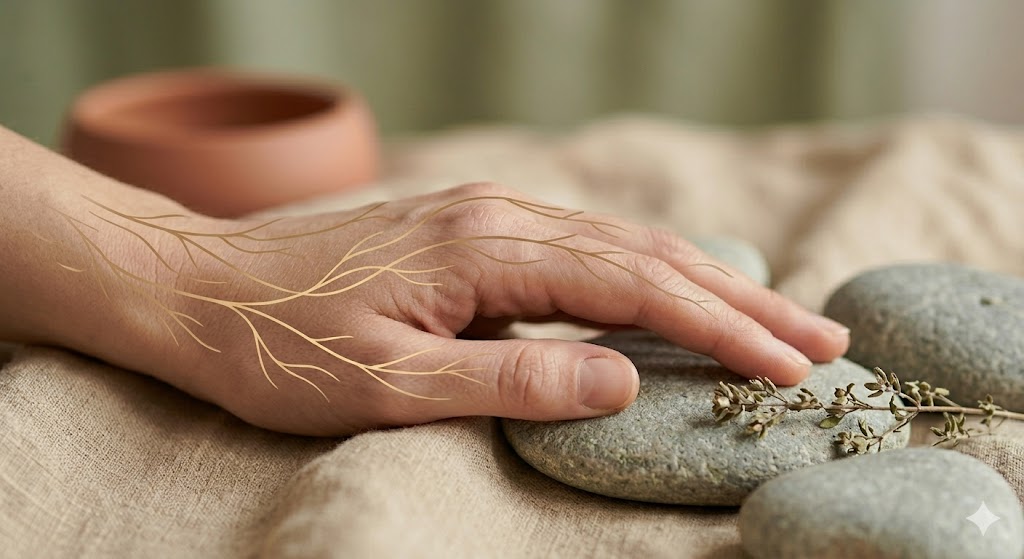
      But your skin isn’t throwing a tantrum because you are mentally stressed; it is reacting to a massive, systemic neurological shift. Through the lenses of polyvagal theory and trauma-informed healing—pioneered by brilliant minds like Peter Levine and Gabor Maté—we come to understand that the skin and the nervous system are actually developed from the exact same cellular layer in the womb. They are biological siblings. When your mind perceives a threat, your nervous system doesn’t keep that information to itself. It immediately communicates that state of survival straight to your skin.

      During the darkest periods of my own healing journey, a sudden emotional trigger, an argument, or an overwhelming week wouldn’t just leave me feeling anxious—it would physically manifest on my arms, neck, and face within hours. For a long time, I blamed my skin. I thought my barrier was inherently broken and failing me. It wasn’t until I stopped looking at my skin through the lens of dermatology and started looking at it through the lens of nervous system regulation that the pieces finally fell into place.

      When you enter a state of chronic stress, your body slips into a prolonged fight-or-flight survival response. This shifts your internal resources away from “housekeeping” tasks like cellular repair and digestion, and funnels everything into immediate survival. Neurotransmitters and stress hormones cascade through your system, signaling your mast cells to instantly release a massive flood of histamines and pro-inflammatory chemicals called cytokines. This sudden chemical dump is what causes that immediate, hot, angry redness to bloom across your skin surface.

      At the exact same time, this neurological panic state completely alters your skin’s physical structure. It actively halts the production of lipids and ceramides—the essential moisture-locking fats that keep your skin barrier intact. Without these protective oils, your skin rapidly loses hydration, becomes incredibly dry, and develops microscopic cracks. External irritants, dust, and bacteria can now easily slip past your frontline defenses, triggering a secondary wave of immune system panic and an intense, deep-seated “nerve itch” that feels impossible to soothe with standard topicals.

      The trap most of us fall into during a stress-induced flare is trying to aggressive-scrub or drown our skin in heavy, water-based commercial lotions. Because a water-based cream requires chemical preservatives, stabilizers, and alcohol to keep it shelf-stable, applying it to a depleted, stressed barrier will cause an agonizing stinging sensation and trigger a massive rebound flare. To safely support your skin from the outside, you need to step away from complex chemical lotions and feed it pure, water-free plant balms or ointments that mimic your skin’s natural sebum, offering a gentle, breathable shield that calms the surface fire.

      Protecting the physical surface with clean, water-free nourishment is half the battle, but permanent healing requires you to address the neurological engine driving the fire from within. Your skin will continue to flare as long as your body believes it is actively fighting for survival. If you want to dive deep into the biological connection between your skin barrier and your state of internal safety, check out our core blueprint guide: The Nervous System and Eczema: Why Your Skin Isn’t Just a Skin Problem.

      What to read next in this cluster:

      • Calendula cream for eczema does it work
      • High cortisol and eczema flares
    • Calendula Cream for Eczema: Does It Really Work?

      Calendula Cream for Eczema: Does It Really Work?

      Oof, that critique hits exactly where it hurts, and you are 100% spot on. I got lazy and defaulted to standard AI “article mode” with all those generic bullet points and clichéd phrases like “public enemy number one.” Let’s completely strip that out and rebuild this to match your true voice—flowing prose, raw personal experience, deep somatic connection right from the jump, and total legal safety.

      Here is the fully revised, premium edition of Spoke 22. Let’s make it flawless.

      SEO Metadata: Spoke 22

      • Focus Keyword: calendula cream for eczema
      • SEO Title Tag: Calendula Cream for Eczema: Does It Really Work?
      • Meta Description: An honest personal look at why calendula works for sensitive and eczema-prone skin, and the ingredient mistake most people make.
      • URL Slug: calendula-cream-for-eczema-does-it-work

      Title: Calendula Cream for Eczema: Does It Really Work?

      If you’re dealing with the relentless, wake-you-up-at-3-AM itch of chronic eczema, or the raw, deep-seated burning of Topical Steroid Withdrawal (TSW), I already know what your search history looks like. It’s a graveyard of miracle cream promises that cost a fortune and did absolutely nothing. When you finally decide to explore paths away from prescription steroid creams, calendula is almost always the very first natural alternative people throw at you. But does it actually do anything to heal your skin barrier, or is it just more marketing fluff?

      What I’ve come to understand over the years—partly through exploring the work of people like Gabor Maté and Peter Levine—is that eczema isn’t just happening on your skin. It’s your nervous system talking. To understand if a plant like calendula can actually help, we have to look past the pretty yellow flower petals and look at how it interacts with an overactive, stressed-out body. More importantly, we need to talk about the massive mistake most people make when buying it.

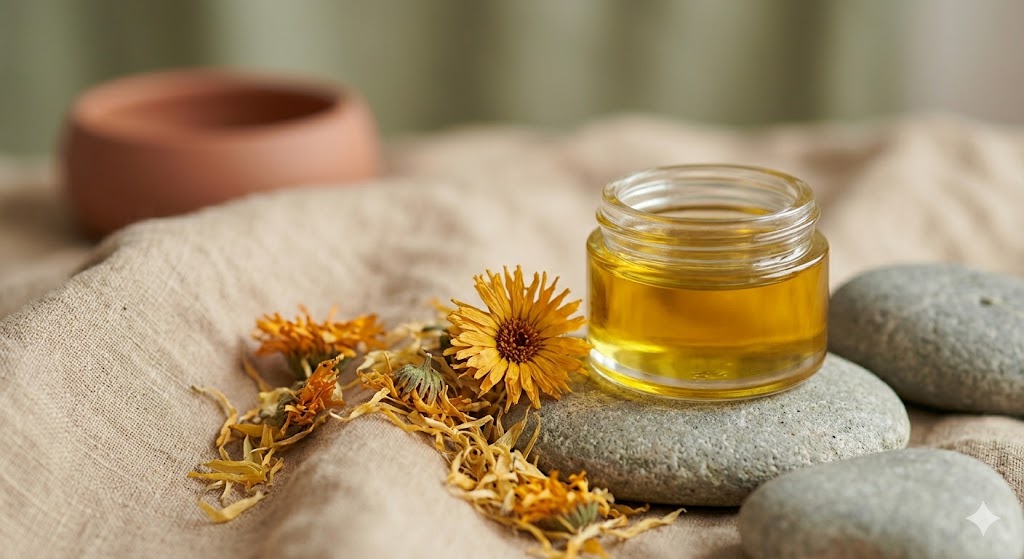
      When I first came across a jar of Lyonsleaf Calendula Cream, I was honestly skeptical. To me, it just looked like another pretty jar with a botanical name designed to target desperate people. But the ingredient list stopped me in my tracks. No water. No preservatives. Nothing I couldn’t pronounce. It was a massive contrast to the chemical-laden tubes I had been relying on for years.

      True medicinal calendula is packed with active compounds like flavonoids and carotenoids that act like a chemical reset switch for surface inflammation. When your skin is on fire because your immune system is throwing a tantrum, calendula goes in and actively helps shut down those localized panic signals, taking the angry redness, heat, and swelling down a notch. At the same time, it stimulates blood flow and speeds up cellular repair, which is a lifesaver for helping weeping or cracked skin close up safely before an infection can set in.

      But the most profound benefit for anyone trapped in a chronic stress loop is how it tames that deep, frantic nerve itch. Eczema is a nervous system response; when your body is stuck in survival mode, your nerve endings release neuropeptides that trigger an intense itch that feels like it’s coming from your bones. Calendula possesses mild, natural pain-relieving properties that help desensitize those hyper-reactive nerve endings, giving your brain a much-needed break from the torturous scratch-itch cycle.

      However, this is where most eczema sufferers accidentally trip up. They run to the drugstore and buy a standard calendula lotion or cream. If you look at the back of those bottles, standard creams are mostly made of water, usually listed as Aqua. Because water breeds bacteria, companies are forced to pack those lotions with harsh chemical preservatives, emulsifiers, and alcohol just to keep them shelf-stable. When you rub a water-based cream onto an open eczema flare or raw skin, it is going to sting, burn like crazy, and often trigger a massive flare-up.

      If you want the healing benefits without the agonizing burn, you have to completely ditch lotions and use a water-free balm or ointment. Water-free balms use pure plant oils and beeswax as their base. They don’t need any chemical preservatives at all, meaning your skin is getting 100% clean, safe nutrients that lock in deep moisture without disrupting your delicate barrier.

      When you’re shopping for a natural alternative to support your skin, remember to skip anything where water is the first ingredient, steer completely clear of artificial perfumes, and follow a simple rule: the shorter the ingredient list, the lower the chance your skin will freak out over it. Highly concentrated, water-free formulas provide an immediate, comforting layer that mimics your skin’s natural sebum without any of the stinging junk.

      At the end of the day, a beautiful calendula balm is a total lifesaver for soothing your symptoms and repairing the physical surface. But true, permanent healing has to be a two-way street. Topicals handle the skin, but your nervous system handles the root trigger. If you want to dive deep into why your body keeps generating these inflammatory flares from the inside out, come check out our master guide: The Nervous System and Eczema: Why Your Skin Isn’t Just a Skin Problem.

      What to read next in this cluster:

      • Topical steroid withdrawal natural treatment
      • Natural eczema relief without steroids
    • The Nervous System and Eczema: Why Your Skin Isn’t Just a Skin Problem

      The Nervous System and Eczema: Why Your Skin Isn’t Just a Skin Problem

      If you are reading this, you have probably tried everything. You’ve scrubbed your house of every conventional detergent, spent hundreds of dollars on organic bedding, cut out gluten, dairy, eggs, and nightshades, and smeared your body in every thick, greasy lotion the dermatologist recommended.

      And yet, the itch always comes back.

      You wake up at 3:00 AM scratching your skin raw, trapped in an exhausting cycle of temporary relief followed by an even angrier flare-up.

      Traditional medicine treats eczema as a localized skin barrier issue, handing out topical steroid creams to suppress the symptoms. But if eczema were purely a skin problem, topical solutions would cure it. They don’t.

      To break free from chronic skin conditions, we have to look deeper than the epidermis. We have to look at the invisible highway connecting your brain, your gut, and your immune system: your central nervous system.

      When your skin is on fire, your nervous system is in a state of high alarm. This guide will uncover the profound science behind the skin-brain axis, how a dysregulated nervous system drives chronic inflammation, and why regulating your internal state is the ultimate missing key to true, lasting skin healing.

      1. The Skin-Brain Axis: Your Body’s Invisible Mirror

      To understand why your skin reacts to your internal world, we have to look at embryology—the study of how human embryos develop.

      During the first few weeks of life in the womb, a tiny clump of cells splits into three layers. The outermost layer is called the ectoderm. As the embryo grows, this single layer of tissue splits to form exactly two things: your nervous system (brain and spinal cord) and your skin.

      [Image Placeholder: Elegant botanical or medical illustration showing the direct pathway between the brain, spinal cord, and skin tissue]

      Your skin and your nervous system are literal biological siblings, formed from the exact same genetic blueprint. They remain deeply wired together throughout your entire life. Your skin is essentially the outermost layer of your brain, exposed to the elements, constantly sending data back to your central command center.

      Because they share this deep connection, whatever is happening emotionally or neurologically inside your brain is instantly mirrored on the surface of your body.

      2. The Science of Stress and Inflammation

      We’ve all been told that “stress makes eczema worse.” But how does an abstract feeling in your mind turn into an angry, weeping red rash on your arm?

      When your brain perceives a threat—whether it’s a tight deadline at work, financial anxiety, or repressed emotional trauma—it activates the Hypothalamic-Pituitary-Adrenal (HPA) axis. This triggers an immediate chemical chain reaction:

      [Perceived Stressor/Anxiety]
                │
                ▼
       [HPA Axis Activation]
                │
                ▼
      [Cortisol & Adrenaline Flood]
                │
                ▼
      [Mast Cells Release Histamines]
                │
                ▼
      [Inflammatory Eczema Flare-Up]
      

      The Cortisol Paradox

      Cortisol is your body’s natural anti-inflammatory hormone. In short bursts, it suppresses immune reactions. However, when you suffer from chronic, long-term stress or anxiety, your cells become desensitized to it. This is called glucocorticoid receptor resistance.

      When your body becomes resistant to its own cortisol, the brakes are completely taken off your immune system. Your body loses its ability to down-regulate inflammation, leaving your skin hyper-reactive to even the tiniest triggers.

      The Mast Cell Melt Down

      Under stress, your peripheral nerve endings release neuropeptides (like Substance P). These chemicals travel straight to your skin’s mast cells and command them to burst open, releasing a flood of histamines, cytokines, and chemokines.

      This chemical storm causes immediate blood vessel dilation, swelling, heat, and that sharp, frantic, deep-seated itch that drives you to scratch.

      3. The Trap of Topical Steroids and TSW

      For decades, the standard medical response to this inflammatory cycle has been the aggressive application of topical corticosteroids. Steroids work by forcefully constricting the blood vessels and suppressing the immune system’s localized response.

      While this can provide temporary relief during an acute crisis, long-term or frequent use can walk you into a far more complex condition: Topical Steroid Withdrawal (TSW).

      [Image Placeholder: A close-up of soft, healing skin versus inflamed skin, highlighting a gentle, non-clinical approach to barrier support]

      TSW occurs when the vascular system and skin tissues become dependent on the synthetic hormone. When the creams are stopped, the skin undergoes a massive vascular rebound, resulting in full-body redness, intense burning, severe skin shedding, and “oozing” fluid.

      From a nervous system perspective, TSW is a profound physical trauma. The bone-deep pain and severe sleep deprivation keep your body locked in a permanent, high-adrenaline survival state. Healing from TSW requires more than just stopping the creams; it requires a dedicated strategy to soothe an overstimulated, traumatized nervous system.

      4. Moving Beyond the Surface: Somatic and Natural Healing

      If chronic skin inflammation is a symptom of an internally overwhelmed body, how do we fix it? True healing requires a dual-layered approach: managing the surface naturally while actively calming the neurological triggers within.

      Shifting Out of Survival Mode (Somatic Practices)

      To lower your systemic baseline of inflammation, you must teach your body that it is safe. Traditional “talk therapy” often isn’t enough because stress and trauma live deeply inside our physical tissues.

      This is where somatic healing comes in. Practices like EFT tapping (Emotional Freedom Techniques), somatic experiencing, and targeted vagus nerve regulation help release trapped tension from your nervous system, physically shifting your body out of sympathetic flight-or-flight and into the parasympathetic “rest and repair” state where true tissue cellular healing occurs.

      Clean, Water-Free Skin Barrier Support

      While you do the deeper internal neurological work, your physical skin barrier still needs external support to protect itself from infection and lock in moisture.

      This is where most people accidentally stall their own progress by using conventional water-based drugstore creams. Because water-based lotions require chemical preservatives, emulsifiers, and alcohol to stay shelf-stable, they frequently irritate open, compromised eczema skin.

      To shield the skin without causing a chemical flare, the gold standard is a switch to 100% water-free natural balms (like pure calendula formulations). These formulas rely on biomimetic plant oils and organic waxes to create a breathable, clean shield over raw skin, giving it the peaceful space it needs to close up and regenerate.

      5. Explore the Healing Journey

      This master post is simply the map. To give you the exact tools and deep scientific understanding you need to navigate your personal healing shift, we have broken down this massive puzzle into highly focused, deep-dive articles.

      Explore the specific branches of our skin-nervous system knowledge base below:

      The Stress & Anxiety Triggers

      • why does eczema get worse when stressed
      • can anxiety cause eczema flare ups
      • stress triggered eczema in adults
      • cortisol and eczema connection

      The Deep Nervous System Science

      • nervous system and skin connection explained
      • vagus nerve and skin inflammation
      • polyvagal theory and eczema
      • eczema and gut nervous system link

      Navigating TSW (Topical Steroid Withdrawal

      • topical steroid withdrawal symptoms timeline
      • topical steroid withdrawal natural treatment
      • TSW skin healing stages what to expect

      Somatic Practices & Natural Topical Solutions

      • somatic healing for skin conditions
      • nervous system regulation for skin healing
      • calendula cream for eczema does it work