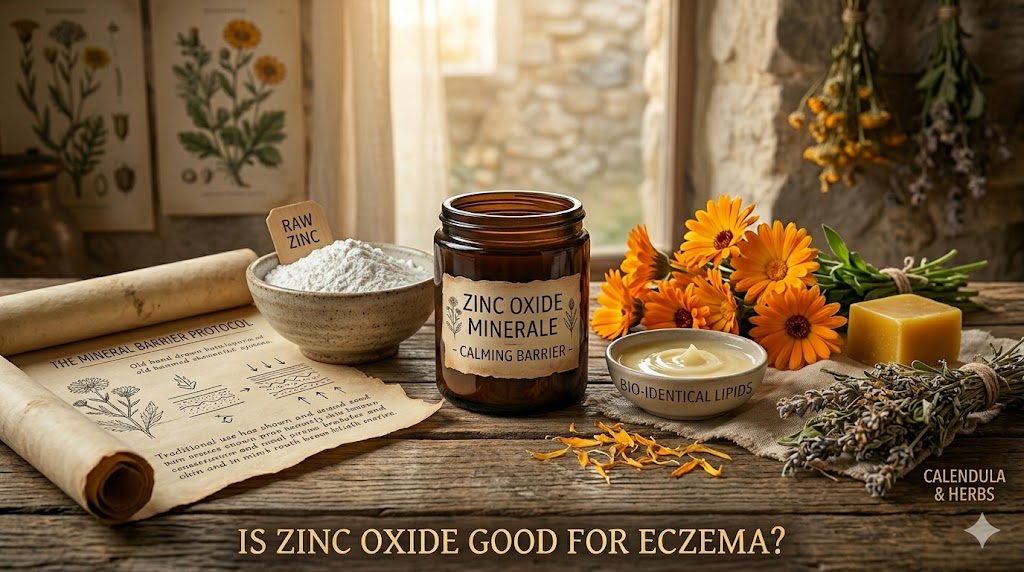
If you are currently managing a severe, raw, or weeping eczema flare-up, you have likely spent hours looking up home remedies, adjustments to your diet, and natural ingredients. During your search, one simple, old-school mineral compound keeps popping up over and over again: Zinc Oxide.
But if you are used to modern, elegant commercial lotions, the idea of putting a thick, white, zinc mineral paste onto your dry skin can feel completely counterintuitive. You might wonder: Is zinc oxide good for eczema, or is it just going to dry out my skin even further and make the irritation worse?
The answer lies in understanding that zinc is not a typical cosmetic moisturizer. It is a powerful, supportive earth mineral that has been used in traditional skin preparation for thousands of years to calm surface tissue distress.
Let’s look closely at the science behind zinc oxide peer-to-peer, and see exactly how dropping a natural mineral ceiling over your skin barrier can help break up the frustrating itch-scratch cycle and give your raw surface nerves immediate insulation.

The Topical Action: How Zinc Oxide Calms the Surface Fire
When your skin barrier is broken down by an eczema flare, your local tissue becomes hot, swollen, and prone to intense, cyclical irritation. As a natural health advocate, I love looking at how zinc oxide addresses this surface chaos through three distinct topical pathways:
1. It Helps Soothe the Surface Itch Sensation
Zinc oxide is highly valued in traditional skincare for its anti-pruritic (itch-soothing) properties. When applied directly to highly irritated skin, the mineral layer forms a protective, cooling presence that takes the sharp edge off the constant urge to scratch. This gives your skin an immediate window of relief, helping you avoid damaging the delicate tissue matrix further with your fingernails.
2. It Down-Regulates Local Surface Heat
Active skin flares generate significant localized surface heat, making the area feel highly sensitive and uncomfortable. Zinc acts as a natural astringent. It works to cool the localized surface temperature, visibly calming the angry look of the flare and reducing the intense, bright purple-red appearance of distressed skin.
3. It Drops a Non-Reactive Physical Ceiling
Unlike synthetic chemical ingredients that absorb deeply or water-based lotions that quickly evaporate into thin air, zinc oxide remains comfortably on the surface. It forms a secure, physical ceiling over your exposed outer skin layers. This shield plays a dual role: it seals in underlying moisture while keeping external pathogens, sweat salts, and airborne environmental irritants from contacting your raw skin.
🛒 A Targeted, Water-Free Mineral Shield
To get the full benefits of zinc oxide without a harsh reaction, it helps to deliver it in a matrix that matches your skin’s natural lipid structure. Many people make the mistake of buying commercial baby nappy creams, but those formulas are frequently loaded with liquid paraffin petroleum, heavy synthetic fragrances, and chemical stabilizers that can aggravate an adult eczema flare.
When you infuse pure zinc oxide into an unadulterated base of botanical lipids and natural beeswax, you create a protective balm that completely eliminates the need for irritating chemical additives. That is exactly what makes Lyonsleaf Zinc & Calendula Cream so distinct.
(Insert your high-converting “Eczema Natural Remedy / Ranked #1 in UK” affiliate banner right here via WPCode Lite)
This UK-made ointment pairs a potent concentration of protective zinc oxide with whole-plant calendula extract, delivering them both inside a bio-identical lipid shield. It provides immediate, zero-sting insulation, cooling surface heat and calming the look of irritation without drying your outer skin barrier out.
Managing Weeping Tissue: Why Zinc is Traditional
One of the most delicate stages of a severe skin flare-up is when the broken barrier begins to weep fluid. This fluid is a sign that your skin’s primary defenses are completely open, leaving the raw tissue highly vulnerable to environmental elements.
This is precisely where zinc oxide has historically been a vital tool in the natural health community.
Because zinc is naturally clarifying and gently absorbing, it manages the excess surface moisture of weeping patches without stripping away the healthy, underlying tissue layers. It gently purifies the surface, allowing the skin matrix a clean, stable environment to knit its outer layers back together naturally and rapidly.
The Takeaway
Is zinc oxide good for eczema-prone skin? Traditional use and community observations point to a resounding yes. It remains one of the most reliable, time-tested mineral tools available for cooling surface heat, reducing the urge to scratch, and protecting vulnerable, weeping tissue layers from external elements.
By avoiding harsh, water-based commercial formulas and dropping a pure, water-free zinc ceiling over your raw flares, you give your skin barrier the absolute safety, structural peace, and unadulterated foundation it needs to recover beautifully.
📚 Reclaim Your Skin: Recommended Reading
- 🌿 The UK High-Street Audit: Looking for the best commercial alternatives available on the UK market? Read our full curation review: Best Eczema Cream UK: Why High-Street Lotions Fail Sensitive Skin
- 🚨 The Cortisone Exit Blueprint: If you are trying to taper off prescription treatments or break out of a frustrating rebound loop, use our safe transition framework: Natural Steroids for Skin: The Ancestral Support Guide

Disclaimer: I am a natural health blogger and advocate sharing my personal research and journey toward skin healing; I am not a medical professional. This content is for educational and informational purposes only and should not be taken as medical advice. Always consult with a qualified healthcare provider before changing your skincare routine or managing chronic skin conditions.
Leave a Reply