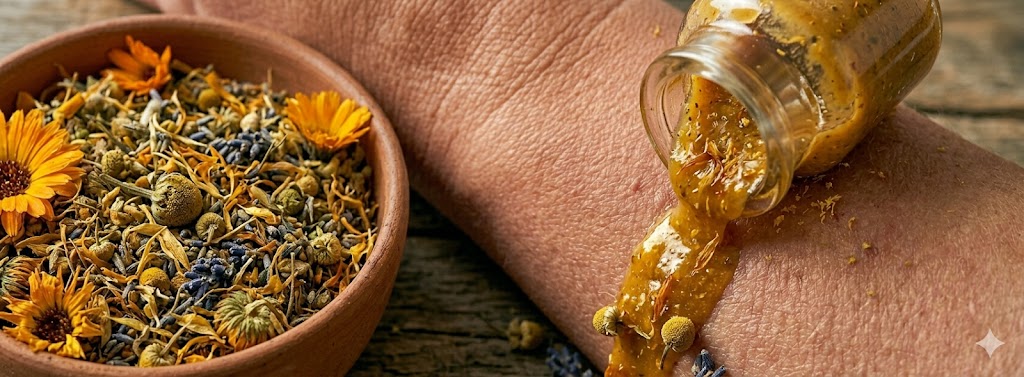
I get it. You are standing in the aisle of a massive drugstore, or maybe you are 12 pages deep into an Amazon search for “calendula cream eczema.” You have three different tubes in your hand, and they all have beautiful pictures of golden marigolds on the front. They all claim to be “natural,” “hypoallergenic,” and “doctor-recommended.”
But here’s the frustrating reality we’ve all faced: you take that “recommended” tube home, apply a tiny pea-sized amount to an active flare-up, and it burns like absolute hell.
In that moment, you don’t feel relieved—you feel betrayed. You feel frustrated and exhausted, wondering how something labeled as “soothing” could cause so much agonizing stinging.
Let me tell you something peer-to-peer: It’s not your fault, and your skin isn’t broken. The problem isn’t the calendula itself. The problem is the dozens of other ingredients hiding behind that pretty marigold picture.
Let’s drop the boring, technical corporate speak and just talk about how to read a label like a pro, so you never buy a tube that stings you again.
For a foundational understanding of how your body reacts during a massive flare, see our pillar post: The Nervous System and Eczema: Why Your Skin Isn’t Just a Skin Problem.
Why “Best-Selling” Doesn’t Mean “Actually Pure”
When you search for the best calendula cream for eczema, Google will gladly hand you lists of products from major multinational corporations. These are the ones that have massive advertising budgets and “dermatologist endorsements.”
But when you flip that bottle over and read the ingredient list, you’ll notice something interesting: Calendula (or its technical name, Calendula Officinalis Leaf Extract) is almost always listed near the very bottom.
In the world of skincare labels, ingredients are listed from the highest concentration to the lowest. So, if “Water” or “Aqua” is the number one ingredient, you aren’t buying a potent botanical balm; you are buying a highly diluted water-cream that needs chemical stabilizers to keep it from molding.
To truly heal, you need a formula where the focus isn’t on the marketing, but on the botanical potency and a completely safe delivery system.
We just did a massive deep dive comparing different healing lipids. See Calendula vs Tallow for Eczema: Which One Actually Heals Your Skin Barrier?for the full structural debate.
The Relatable Cheat Sheet: Spotting the “Hidden Bad Guys”
Let’s create a visual rulebook. When you are looking at the back of a lotion bottle, you want to glance at the list of long, scientific-sounding names and quickly spot the ones that are likely to trigger a sensory panic on your skin.
Think of it like this: your skin is an open wound. You need things that offer heavy structural barrier repair, not chemical irritation.
⛔ If you see these terms, put the bottle back down.
| Common Ingredient Name | Why You Should Be Skeptical (The Relatable Breakdown) |
| Alcohol / Alcohol Denat. | The ultimate betrayer. It makes creams feel light and quick-drying, but on eczema, it causes that sharp, stinging panic attack. It also strips what little natural oil you have left. |
| Fragrance / Parfum | The sneaky marketing “loophole.” Corporations can use this word as a bucket to hide hundreds of synthetic chemicals they don’t have to disclose. These are massive, aggressive flare-up triggers. |
| Methylparaben / Propylparaben | Common preservatives that keep water-based creams from spoiling. While they keep bacteria out, they easily irritate raw nerve endings and cause intense stinging. |
| Mineral Oil / Petroleum Gel | A literal byproduct of oil refining. Think of it as wrapping your skin in plastic wrap—it might hold moisture in, but it smothers the cells and provides zero nutrition or vitamins to rebuild. |
| Dimethicone / Silicone | Added to make the lotion feel velvety and slippery. It feels nice for 10 seconds, but it just creates a synthetic film on top. Real healing nutrients cannot pass through this barrier. |
Decoding Your Favorite “Natural” Brands
Let’s look at a generic, common ingredient label for a brand that markets itself as “calendula-based for eczema.” It looks something like this:
Aqua (Water), Glycerin, Mineral Oil, Ceteareth-20, Methylparaben, Dimethicone, Calendula Officinalis Extract, Parfum (Fragrance).
When we break this down together, you see the problem:
- Water is the first ingredient.
- Then comes Glycerin (a cheap, generic moisturizer), followed immediately by Mineral Oil (that nutrition-less barrier).
- Then you get your stabilizers (Ceteareth-20 and Dimethicone) and a preservative (Methylparaben) that causes stinging.
- Finally, you get the Calendula. And it’s right next to Parfum, which will almost certainly cause a flare-up.
This isn’t a healing remedy. This is a chemical emulsion where the potent botanical is just a marketing afterthought.
What a Real Healing Label Looks Like (The Gold Standard)
The actual best calendula cream for eczema isn’t found on a typical supermarket shelf—it’s made without a single drop of water, alcohol, or synthetic preservatives. When a brand treats the ingredients like real nutrition, the label looks radically different.
A perfect example of this is a small, specialized brand out of the UK called Lyonsleaf.
If you flip over a jar of their Zinc and Calendula Cream, you won’t find a massive list of unpronounceable chemicals. Instead, their entire label reads like real food for a broken skin barrier:
Sunflower Oil, Babassu Oil, 18% Non-Nano Zinc Oxide, Pure Beeswax, Borage Oil, Natural Vitamin E, Whole Organic Calendula Flower Extract, Marshmallow Root Extract.
Let’s look at why this works so beautifully without burning:
- 100% Water-Free: Because there is no water, they don’t have to add harsh chemical preservatives or alcohols to keep it from spoiling. That means zero stinging on application.
- Potent Anti-Inflammatory Teamwork: They combine whole-plant organic calendula with 18% non-nano zinc oxide. The calendula goes to work calming the local tissue fire, while the zinc creates a highly breathable, moisture-repellent shield that protects fragile skin.
- Real Structural Nutrition: Instead of petroleum byproducts, they use raw plant oils and beeswax that are naturally rich in ceramides and essential fatty acids. Your skin actually recognizes these lipids, absorbing them deeply to rebuild the structural wall.
You can see how they formulate their water-free blends directly on the official Lyonsleaf Skincare Hub.
If you want to stop the vicious loop of buying drugstore lotions that leave your skin worse off, stop looking at the front of the bottle. Flip it over. Look for a pure, water-free, ancestral blend like Lyonsleaf, and give your skin the unadulterated nutrition it needs to finally rest and heal.
Disclaimer: I am a natural health blogger and advocate sharing my personal research and journey toward skin healing; I am not a medical professional. This content is for educational and informational purposes only and should not be taken as medical advice. Always consult with a qualified healthcare provider before changing your skincare routine or managing chronic skin conditions.
Leave a Reply